
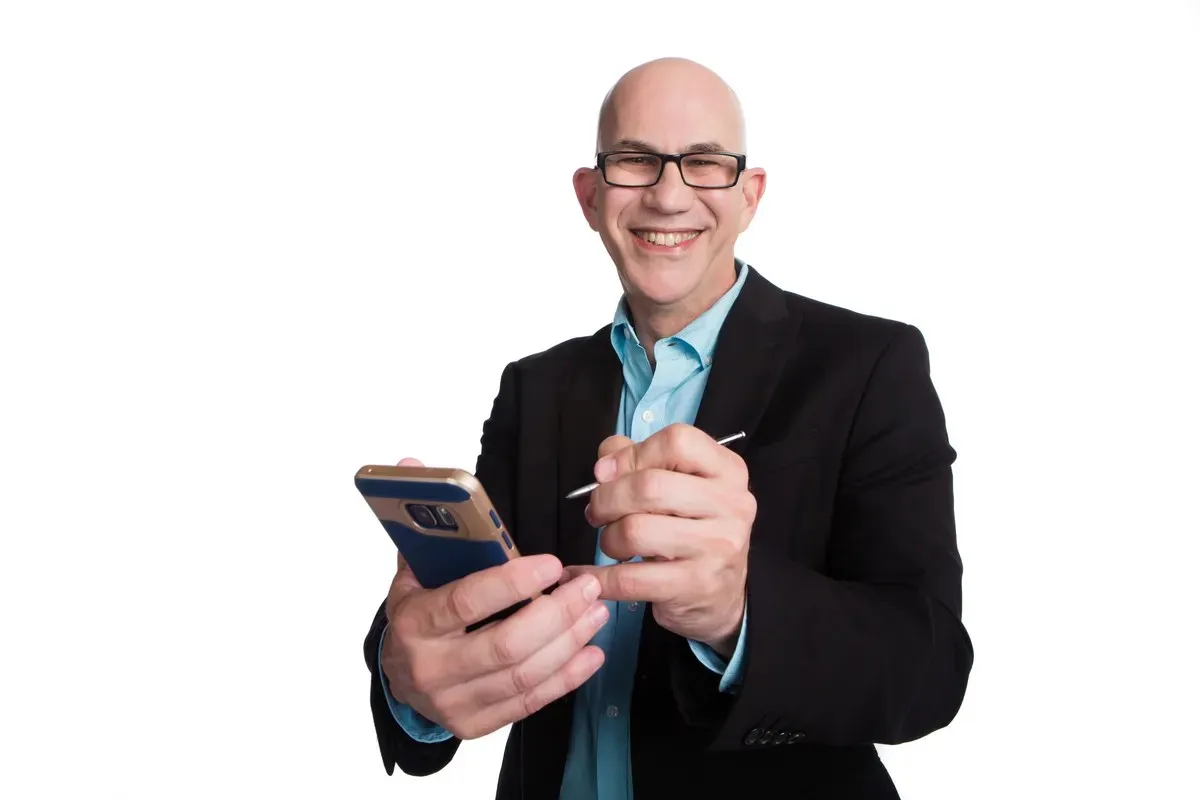
Looking important is a lousy brief for a headshot
‘Make me look important’ is a lousy brief for a headshot. Important to whom? For what? And what happens when they actually meet you?
You’ve narrowed your new headshots down to three. In one, you like your smile. In another, the lighting looks great. In the third, you look a little more serious, which feels more professional.
Does serious automatically mean professional? Does professional mean anything useful without knowing the job the picture has to do?
It’s tempting to keep comparing until one becomes the obvious winner. You might send them to a few friends and ask which they like best. Sometimes that helps. Sometimes you end up with three different answers and less confidence than you started with.
‘Best’ is doing a lot of work in that question. So is your ego. That’s understandable; it’s your face. It just isn’t the whole brief.
A headshot sits in a particular place, beside particular information, for a particular audience. The person seeing it on a company website may be wondering who will handle their project. Someone looking at a speaker announcement may be deciding whether the session feels relevant to them. A prospective collaborator on LinkedIn may be trying to picture the person behind the experience listed on the page.
They’re bringing a different question from the one you bring when you look at your own face.
You know the parts of your appearance you tend to notice first. You also know your personality, your sense of humor and how you behave when you’re comfortable. You can fill in a lot that isn’t visible in a single frame. A person who hasn’t met you has much less to work with.
Imagine a consultant whose work depends on clients feeling comfortable asking questions. A very formal portrait might be entirely appropriate. But if the expression feels distant to the intended audience, and every other image carries the same tone, the page may be making that first conversation feel harder than it needs to be.
Now imagine someone who does precise, methodical work. A relaxed portrait can still suit them perfectly. The question is whether the photograph, the writing and the rest of the page come together in a way that feels consistent with how they actually work.
There isn’t one expression that reliably means ‘trustworthy,’ or one background that makes everyone look competent. Folding your arms doesn’t manufacture authority. People read photographs differently. Copying the style of a person you admire can be an unreliable shortcut because their image belongs to their context. Yours needs to work in yours.
You can also ask too much of a single photograph. Your profile picture needs to remain recognizable when it’s small. A wider portrait on your website can show something about the setting in which you work. Another image might show you teaching, listening or making something. Together, those photographs can offer a fuller introduction.
This is the point where I’d change the selection question. What should someone reasonably expect when they meet you, and which photograph helps prepare them for that experience?
A useful portrait creates continuity between the person on the page and the person in the conversation. You can look polished, confident and prepared while still looking like someone your clients and colleagues would recognize.
Before choosing a final image, write down who it’s for and where it will appear. Then describe the impression you want in everyday language. ‘Comfortable asking me a question’ is more useful than ‘approachable.’ ‘Someone who will take time to understand the problem’ is more useful than ‘professional.’ The more specific you are, the easier it becomes to discuss whether a picture is doing its job.
Look at each candidate in the actual setting where it will be used, including the crop. Then ask a few people who understand your intended audience what kind of interaction they would expect with the person in the picture. Keep the question open so you hear their impression rather than confirmation of yours.
You don’t have to obey every answer. Look for a pattern, then compare it with how you genuinely show up. If there’s a mismatch, you have something specific to adjust or discuss with your photographer.
That makes a headshot decision more purposeful. Choose an image that supports an accurate introduction, and let the rest of your photography add the context one frame can’t carry.
For a planned headshot or brand session, Everywhere Photography begins with that intended introduction. If you’re making your own images, SEE develops the habit of deciding what you want a photograph to communicate and evaluating what it actually shows. Start there, before choosing your favorite.